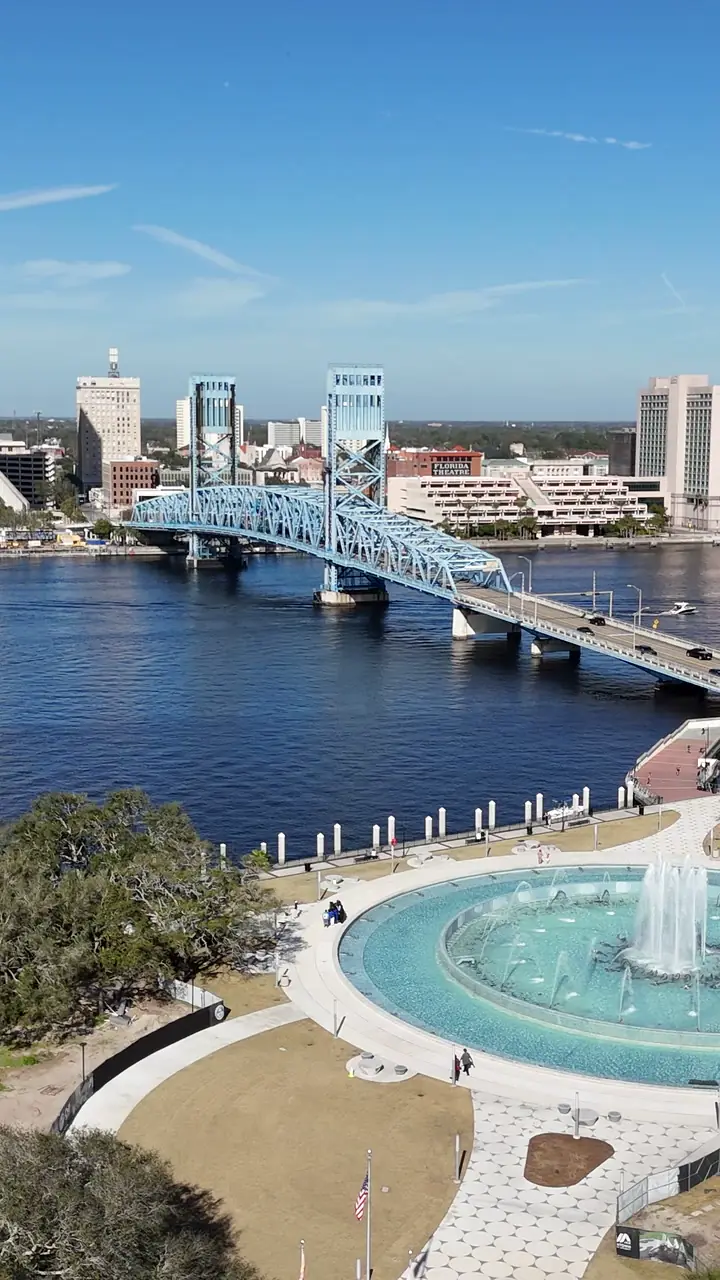
How Much Does Warehouse Insurance Cost in Florida? (2026 Per-Square-Foot Guide)
By Ricardo Alonso, Founder, Atesa Risk Advisors · October 8, 2026
Key Takeaways
- Average commercial property premiums fell 6.3 percent in the second quarter of 2026 per the Council of Insurance Agents & Brokers' national broker survey — the steepest drop of any line it tracks for the second straight quarter [1].
- There is no honest statewide per-square-foot price for warehouse insurance. The property rate is built from five inputs: construction class, roof age and condition, sprinkler protection, what you store, and the wind deductible you accept.
- The largest number on a Florida warehouse policy is usually the named-storm deductible. A 5 percent deductible on a $6,000,000 building means $300,000 out of pocket before the policy pays a dollar.
- Florida's hurricane deductible applies only to losses from a storm the National Hurricane Center has declared a hurricane — a named tropical storm does not trigger it (FS 627.4025). [3]
- The federal flood program caps a non-residential building at $500,000 of coverage and contents at another $500,000, with contents paid at actual cash value. [4]
- Jacksonville's industrial vacancy reached 10.6 percent in the first quarter of 2026, up from 6.1 percent a year earlier, per Colliers data reported by the Jacksonville Daily Record. [5]
Nobody can honestly quote your warehouse per square foot, and any website publishing a flat Florida per-square-foot warehouse rate is guessing. Average commercial property premiums fell 6.3 percent in the second quarter of 2026 [1], and the owner with a documented roof, verified sprinklers and a deliberate deductible decision gets the best of that market. The 2026 commercial property market is the softest buyers have seen in nearly a decade, and the owner who forwards last year's declarations page and asks what the renewal looks like leaves money on the table. This guide is the actual math — what underwriters price, in the order they price it.
The national lead-generation sites that rank for "warehouse insurance cost per square foot" have never seen a Florida roof. They publish a number because a number gets the click. The real answer is a build-up: a property rate applied to your building's replacement cost, a general liability charge for the operations inside, and a wind deductible that functions as self-insurance whether you planned for it or not.
I place warehouse programs across Florida, and the quoting spread on the same building can be enormous — each carrier weighs the five drivers below differently. Show the underwriter the building, and the spread starts working for you instead of against you.
What a Florida Warehouse Insurance Program Includes
A complete program for a warehouse owner or operator has four to six parts. Here is each one in plain English.
| Coverage | What it actually does | What moves the price |
|---|---|---|
| Commercial property | Rebuilds the structure and replaces your own contents and equipment after fire, wind, theft | Construction class, roof, sprinklers, replacement cost |
| General liability | Defends and pays when a visitor, vendor, or driver is hurt on your premises | Occupancy, foot traffic, tenant vs. owner operations |
| Business income | Replaces lost revenue and continuing expenses while the building is unusable | Revenue, realistic downtime, dependency on the one location |
| Flood | Water rising from outside — excluded on the property form, always | Flood zone, elevation, NFIP caps vs. private market |
| Equipment breakdown | Electrical and mechanical failure of racking systems, dock equipment, refrigeration | Equipment type and age |
| Workers' compensation | Required for most Florida warehouse employers — statutory, priced per $100 of payroll | Payroll, class codes, experience mod |
One distinction matters before anything else. If customers pay you to store their goods, your liability for that inventory is a separate coverage called warehouse legal liability — I wrote a full guide to it in the marine cargo and warehouse legal liability post. This post covers the building and your own program.
The Five Drivers That Set a Warehouse Property Rate
1. Construction class
Insurers sort every commercial building into a construction class — a standardized label for what burns. Tilt-wall concrete and masonry sit in a better class than steel frame with metal panels, which sits far above anything wood-framed. You cannot change your class, but you can make sure the carrier has it right. I have seen a pre-engineered metal building submitted as "frame" by a rushed agent, and the owner paid a wood-building fire rate on a steel building for three renewal cycles.
2. The roof
On a Florida warehouse the roof is the biggest variable you can actually do something about. More on this below — it gets its own section because I hold a general contractor license and a roofing contractor license, and the roof file is where those licenses pay for themselves on a placement.
3. Sprinklers
A fully sprinklered warehouse and an unsprinklered one are different risks priced from different pages. Underwriters will ask whether the system is wet-pipe or dry, when it was last inspected and tagged, and — for high-piled storage — whether the design is ESFR (Early Suppression Fast Response, a sprinkler design using larger, faster heads to knock down a rack fire from the ceiling). An uninspected system can hurt a submission more than no system, because it signals deferred maintenance everywhere else. I am not saying an unsprinklered warehouse is unplaceable — plenty of smaller buildings place fine — but the market for them is thinner and the rate shows it.
4. What you store
Underwriters price the contents' behavior in a fire, using commodity classifications. Paper records and canned goods behave. Plastics, aerosols, tires, and anything flammable turn the same rack bay into a different fire. If your commodity mix has changed since the policy was written — you started storing e-commerce inventory with heavy plastic content, say — tell your broker before renewal. A commodity mismatch discovered during a claim adjustment is a coverage fight you do not want.
5. Location and the wind deductible
Distance to coast, wind-borne debris zone, and flood zone set the catastrophe load on the rate. You cannot move the building. What you can control is the deductible structure — and that decision deserves its own section, because it is the biggest number on the policy.
The Named-Storm Deductible Is the Biggest Number on the Policy
Florida commercial property policies carry a separate deductible for hurricane or named-storm losses, expressed as a percentage of the building's insured value rather than a flat dollar amount. Run the arithmetic on your own building, because percentages hide the size of the check. Say your warehouse is insured for $6,000,000 and the policy carries a 5 percent named-storm deductible. A hurricane peels back a third of the roof and the claim totals $900,000. Your share is $300,000 — before the policy pays anything.
Florida law is precise about when a hurricane deductible can apply: only to losses from a storm the National Hurricane Center has declared a hurricane, from the moment watches or warnings are issued until up to 72 hours after they end (FS 627.4025) [3]. A garden-variety thunderstorm or an unnamed windstorm falls under your standard deductible instead. The statutory menu of hurricane deductible options in FS 627.701 is written for residential policies [8] — on a non-residential warehouse the percentage is whatever you and the carrier negotiate, which means it is negotiable.
Three ways to manage that number. Buy the deductible down with the carrier where pricing allows. Buy a separate deductible buyback policy — a second policy that reimburses your deductible layer, which I walked through in the hurricane deductible buyback post. Or keep the high deductible deliberately and hold the cash — legitimate, as long as the $300,000 is a decision you made on purpose.
The Roof File: What a Contractor's Eye Does to a Warehouse Quote
Here is what carriers see when they look at a big-box roof: hundreds of thousands of square feet of membrane or metal panel, a decade or three of Florida sun, and the most expensive single component they will ever be asked to replace. Roof age drives declinations on warehouse submissions more than any other underwriting fact. Past a certain age, many carriers will only cover the roof at actual cash value — the depreciated value rather than the cost of a new roof — through an ACV roof endorsement, and some will not quote at all.
The counter is documentation, and this is where I put my contractor licenses to work before a submission goes out. A real roof file contains the installation invoice or permit record establishing the true age, the membrane type and attachment method, any uplift or fastener documentation for metal panel systems, the maintenance and repair log, and photos of the field, the flashings, and the drains. A recover — a new membrane over the old one — is not the same as a replacement in an underwriter's eyes, and the file should say plainly which one happened and when.
I took on a referred warehouse account a while back that had been non-renewed over "roof age" — the carrier's file said the roof was original to the 1990s building. The permit history said otherwise: a full tear-off and TPO replacement eleven years prior, with a transferable manufacturer's warranty still in force. We rebuilt the submission around the documented roof, and the account placed with an admitted carrier at a rate the owner had been told was impossible. The roof had never been the problem. The paperwork was.
— Ricardo Alonso, Founder, Atesa Risk Advisors
If the roof genuinely is at end of life, time the capital expense against the renewal calendar. A roof replaced 90 days before renewal shows up in this year's pricing. A roof replaced 30 days after renewal buys you nothing until next year.
Owner-Occupied or Leased Out: Two Different Programs
An owner running their own operation inside the building buys the program in the table above. An owner leasing the warehouse to a tenant needs something different: lessor's risk coverage — the landlord's version of general liability for a building someone else occupies — plus a lease that actually transfers risk, with tenant liability limits, additional-insured status for you on the tenant's policy, and certificates of insurance someone actually tracks.
The tenant's policy covers the tenant's operations and the tenant's goods. It does not rebuild your building. I covered the mechanics in the lessor's risk guide and the tenant insurance requirements guide — both written around retail plazas, and the logic transfers to industrial nearly unchanged.
Why 2026 Is the Year to Re-Shop a Florida Warehouse
The commercial property market has turned. The Council of Insurance Agents and Brokers' second-quarter 2026 survey recorded an average 6.3 percent premium decrease for commercial property — the largest drop among all lines surveyed for the second consecutive quarter, with three-quarters of responding brokers reporting increased property capacity [1]. Marsh's global index showed property rates falling 12 percent in the second quarter [2]. Carriers that would not look at Florida industrial three years ago are quoting it again.
The local supply picture sharpens the point. Jacksonville — the state's logistics hub, anchored by JAXPORT and its completed $419 million harbor deepening — added speculative warehouse space faster than tenants absorbed it, and Colliers put industrial vacancy at 10.6 percent in the first quarter of 2026, up from 6.1 percent a year earlier [5]. Marcus & Millichap expects 2026 deliveries to slow to their lowest level since 2018 [6]. For an owner carrying soft rents, the expense line you can actually fix this year is the insurance line.
A 2023-era declination on roof age or commodity class tells you nothing about the 2026 market. Show the underwriter the building — the current building, with the current file — and let this market compete for it.
Florida-Specific Considerations
Flood is excluded, and the federal caps are low for industrial. Every commercial property form excludes rising water. The National Flood Insurance Program caps a non-residential building policy at $500,000 for the structure and $500,000 for contents, paid at actual cash value [4]. Against a multi-million-dollar warehouse full of inventory, that is a deductible, not a solution — owners who need real flood limits buy private or excess flood above the NFIP layer, or instead of it.
Workers' compensation is statutory. Florida requires coverage for most non-construction employers at four or more employees (FS 440.02) [7], which captures essentially every staffed warehouse. Rates are set statewide through an NCCI filing approved by the Office of Insurance Regulation, so the savings live in classification accuracy and your experience mod, never in shopping the rate.
Business income needs a realistic downtime number. After a major hurricane, rebuilding a warehouse is not a 90-day project — permitting, adjusting, and contractor availability stretch timelines. Set the business income limit from a contractor's calendar instead of a hopeful one.
Your 120-Day Renewal Timeline
| Days before renewal | What to do |
|---|---|
| 120 | Request loss runs from every carrier for the past five years. Read them before anyone else does. |
| 100 | Build the roof file: permits, invoices, warranty, photos, repair log. |
| 90 | Verify sprinkler inspection tags are current and fix anything red-tagged. Document your commodity mix honestly. |
| 75 | Update the replacement cost estimate so you are insured to value — underinsurance penalties hurt at claim time. |
| 60 | Decide your named-storm deductible strategy: buy down, buy back, or budget the retention. |
| 45 | Go to market through one broker with the complete file. Competing brokers blocking each other's markets costs you leverage. |
FAQ: Florida Warehouse Insurance Costs
Q: How much does warehouse insurance cost per square foot in Florida?
A: There is no credible statewide per-square-foot figure. The rate is built from construction class, roof age and condition, sprinkler protection, commodity stored, and wind exposure — two same-size warehouses a mile apart can price far apart on those facts alone.
Q: Does a sprinkler system lower warehouse insurance costs?
A: Yes, materially — a documented, currently inspected system widens your carrier options and improves the property rate. An uninspected or impaired system can hurt a submission more than having none, because it signals deferred maintenance.
Q: My tenant carries insurance. Does that cover my building?
A: No. The tenant's policy covers the tenant's liability and the tenant's property. The building owner needs their own property coverage plus lessor's risk liability, and the lease should name you as an additional insured on the tenant's policy.
Q: How does the hurricane deductible work on a warehouse?
A: It is a percentage of the building's insured value — on a $6,000,000 building, a 5 percent deductible is $300,000 you pay before the policy responds — and it applies only to storms the National Hurricane Center declares hurricanes (FS 627.4025). The percentage is negotiable on non-residential policies, and buyback policies exist to insure the deductible layer itself.
Q: Do I need flood insurance if the warehouse is not in a high-risk zone?
A: Your property policy excludes flood wherever the building sits — mapped high-risk zone or otherwise — and Florida water does not read maps. Outside high-risk zones the pricing is often modest enough that carrying it is an easy call, and real limits beyond the NFIP's $500,000 non-residential cap usually mean the private market.
Q: What does the commodity I store have to do with my building's rate?
A: Underwriters price how your contents burn. High-plastic inventory, aerosols, and tires create hotter, faster fires than paper or canned goods, which changes both the sprinkler design the building needs and the rate. Report commodity changes before renewal.
Q: At what roof age do carriers start declining warehouses?
A: There is no universal cutoff — it varies by carrier and roof system, and documentation moves the line. A 20-year-old roof with permits, warranty, and a maintenance log often places where an undocumented 12-year-old roof struggles. Expect actual-cash-value roof endorsements to enter the conversation as the roof ages.
Related Reading
- Florida Commercial Property Insurance and Hurricane Coverage in 2026 — the statewide fundamentals under every building-specific post in this series.
- Jacksonville Commercial Hurricane Deductible Buyback — insuring the deductible layer itself when the percentage math gets uncomfortable.
- Florida Marine Cargo Insurance: Warehouse Legal Liability — when the goods in your racks belong to your customers.
- The Jacksonville Commercial Insurance Non-Renewal Playbook — the 30-day sequence when a carrier walks away.
How Atesa Risk Advisors Can Help
Warehouse placements reward preparation more than almost any commercial line, because the facts that drive the rate — the roof, the sprinklers, the commodity mix — are documentable, and most submissions leave them undocumented. I hold Florida general contractor and roofing contractor licenses alongside the 2-20 insurance license, so the roof file that goes to the underwriter was built by someone who has put roofs on buildings. We work with admitted and surplus lines markets across Florida for industrial property, and in a softening market the spread between the first quote and the best quote is wide. One complete submission, shopped properly, finds it.
Own or operate a Florida warehouse? Get your free quote and consultation at atesariskadvisors.com/get-quote or call (904) 900-5063.
Sources
[1] The Council of Insurance Agents & Brokers — Q2 2026 P&C Market Survey (August 18, 2026)
[3] Florida Statutes s. 627.4025 — Residential coverage and hurricane coverage defined
[4] FEMA FloodSmart — Flood Insurance Coverage Limits (agent guidance)
[6] Marcus & Millichap — Jacksonville 2Q 2026 Industrial Market Report
[7] Florida Statutes s. 440.02 — Workers' compensation definitions and employment thresholds
[8] Florida Statutes s. 627.701 — Liability of insureds and deductibles
External Resources for Warehouse Owners:
- FEMA Flood Map Service Center — look up your parcel's flood zone by address
- Florida Division of Workers' Compensation — coverage requirements and exemptions
Ricardo Alonso is the Founder of Atesa Risk Advisors, a Florida independent insurance agency. Licensed 2-20 General Lines Agent and 2-15 Health & Life Agent, with a Master of Liberal Arts in Finance from Harvard University. He also holds Florida general contractor and roofing contractor licenses, and builds the roof documentation on industrial placements himself.
Educational disclaimer: This article is general educational information about insurance and is not insurance advice, a quote, or an offer of coverage. Rates, discounts, deadlines, and requirements change and vary by property; confirm current figures with primary sources and a licensed agent before relying on them. Coverage is subject to the terms of your policy. For a personalized review, contact Atesa Risk Advisors, an independent, RamseyTrusted brokerage licensed in Florida (2-20 General Lines).