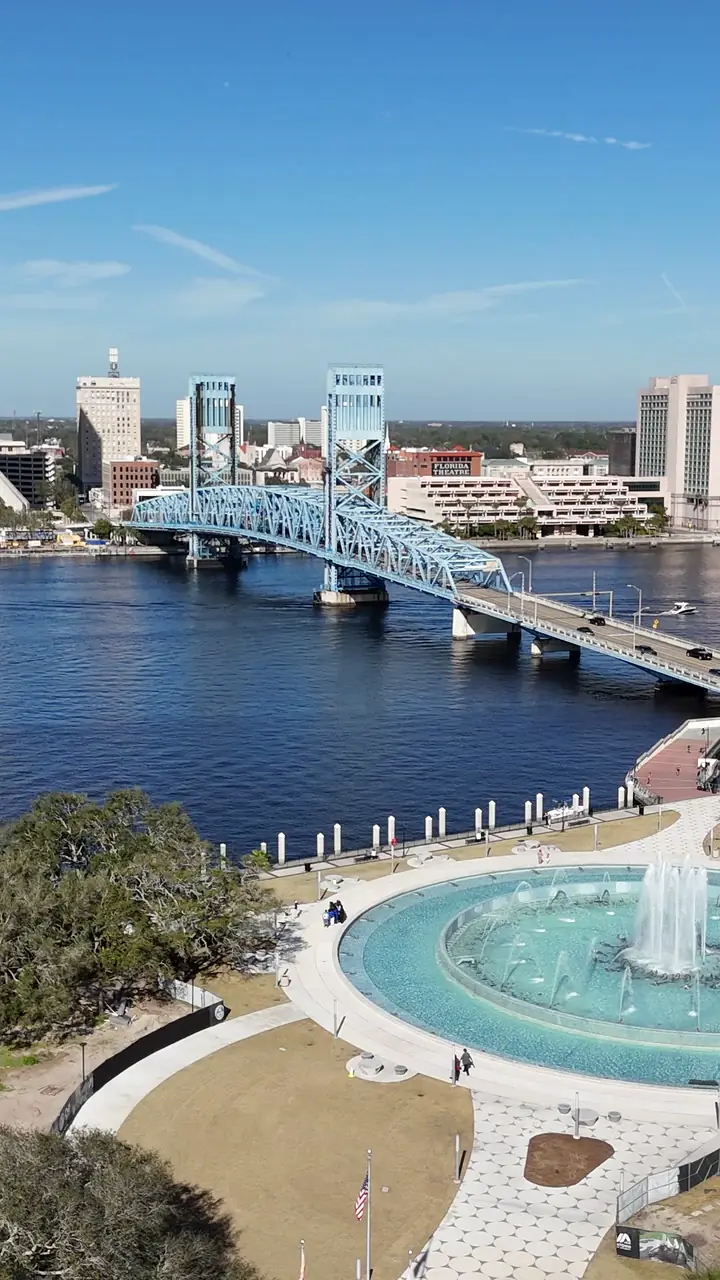
Contractors Insurance in Jacksonville, St. Augustine and Northeast Florida
Florida licensed contractors must carry workers' compensation from their first employee (FS 440.02) plus public liability and property damage insurance: $300,000 and $50,000 for general and building contractors, and $100,000 and $25,000 for residential, roofing and specialty contractors (Rule 61G4-15.003). Contracts in Jacksonville and St. Augustine usually require far more, typically $1 million per occurrence of general liability.
GL, workers' comp and tools coverage for Jacksonville and St. Augustine contractors: DBPR license minimums, SR 207 growth, same-day COIs. Free quote.
Figures reviewed against Florida Statutes and carrier bulletins on September 27, 2026.
Contractors insurance in Jacksonville and St. Augustine
Northeast Florida permitted more than 10,700 housing units in 2025. The crews building them answer to DBPR's licensing rules, Florida's workers' compensation statute and general contractors who read certificates line by line.
Jacksonville and Duval County
Duval authorized 3,732 single-family units and 2,253 units in buildings of five or more in 2025, about $1.13 billion of residential permit value, on top of its commercial and industrial work.
- The state's licensing floor is set by Board rule: $300,000 of public liability and $50,000 of property damage coverage for general and building contractors, $100,000 and $25,000 for residential, roofing and every specialty trade, with DBPR and the Construction Industry Licensing Board named as certificate holder and the policy carried in the licensee's name (Rule 61G4-15.003; FS 489.115(5)(a)).
- Workers' compensation is mandatory from the first employee in construction; the officer exemption covers no more than three officers who each own at least 10% of the company and is filed electronically for a $50 fee (FS 440.02(18)(b)2., (20)(b)2., 440.05).
- A stop-work order takes effect at every non-compliant worksite you have in Florida, carries a penalty of twice the premium you avoided (minimum $1,000, with a 24-month look-back for concealed payroll or repeat offenders), and stays on the state's website for at least five years (FS 440.107(7)).
- OIR approved a 6.9% statewide workers' compensation rate decrease for policies effective on or after January 1, 2026, the ninth consecutive annual decrease; roofing, framing and masonry class codes still carry the highest rates per $100 of payroll, so the experience modifier is where a Jacksonville contractor's savings actually live.
St. Augustine and St. Johns County
St. Johns County authorized 3,554 single-family units and 1,039 units in 5+ unit buildings in 2025, about $1.20 billion of residential permit value, and the county certified about 1,165 acres of agricultural enclaves for homes along the SR 207 corridor on August 19, 2026.
- Completed-operations claims follow FS 95.11(3)(b): a four-year limitations period from the earliest of the temporary certificate of occupancy, certificate of occupancy, certificate of completion or abandonment (latent defects from discovery), inside an absolute seven-year repose, so the general liability policy you carry years after the job closes is the one that answers for it.
- General contractors on St. Johns County projects require subcontractor certificates showing GL, workers' compensation or valid exemptions, and additional-insured wording before the first day on site; a sub with lapsed coverage puts its payroll into the GC's audit and its injuries onto the GC's policy.
- Builders risk, installation floaters and tools and equipment coverage are the forms that pay for the material and gear on an unfinished house; none of them is included in general liability, and lenders on the corridor ask for the builders risk certificate at the first draw.
Privately owned residential construction authorized in 2025 (U.S. Census Building Permits Survey)
| County | Single-family units | Units in 5+ unit buildings | All units | Permit valuation |
|---|---|---|---|---|
| Duval | 3,732 | 2,253 (69 buildings) | 6,017 | about $1.13 billion |
| St. Johns | 3,554 | 1,039 (34 buildings) | 4,735 | about $1.20 billion |
Totals are the sum of the Census county file's single-family, 2-unit, 3-4 unit and 5+ unit rows and include imputed values; commercial construction is not in this survey.
Guides
- St. Johns County Just Certified 1,165 Acres for Homes: The SR 207 Corridor Contractor's Insurance Guide (2026)
- Florida Roofing Contractor Insurance: The 2026 Guide to Every Coverage You Need (and How to Pay Less)
- Florida Contractor Insurance Bundle: The Complete 2026 Guide to GL, Workers' Comp, Tools, and Builders Risk
- Enrolled in a Wrap-Up? The Florida Subcontractor's Guide to OCIP and CCIP Insurance in 2026
Data sources
- Rule 61G4-15.003, Florida Administrative Code (public liability insurance minimums for licensed contractors)
- Florida Statutes § 489.115 (contractor certification; insurance amounts set by Board rule)
- Florida Statutes § 440.02 (workers' compensation: coverage thresholds, officer exemptions)
- Florida Statutes § 440.05 (election of exemption)
- Florida Statutes § 440.107 (stop-work orders and penalties)
- Florida Office of Insurance Regulation, 6.9% workers' compensation rate decrease approved for Jan. 1, 2026 (Nov. 17, 2025)
- Florida Statutes § 95.11 (limitations of actions: construction defects, negligence)
- U.S. Census Bureau, Building Permits Survey, county annual data 2025
Frequently Asked Questions
What insurance does DBPR require to hold a Florida contractor's license?
Workers' compensation as required by Chapter 440, plus public liability and property damage insurance (FS 489.115(5)(a)). Under Rule 61G4-15.003 the amounts are $300,000 and $50,000 for general and building contractors, and $100,000 and $25,000 for residential, roofing and other specialty contractors. The certificate holder must be DBPR and the Board, and the policy must be in the licensee's name.
Which Florida contractor trades fall under the $100,000 and $25,000 requirement?
Under Rule 61G4-15.003, residential, roofing, sheet metal, air conditioning, mechanical, pool, plumbing, underground utility, solar and other specialty contractors must carry $100,000 of public liability and $25,000 of property damage. General and building contractors must carry $300,000 and $50,000. Most Jacksonville and St. Augustine contracts require far more, typically $1 million per occurrence.
How busy is construction in Jacksonville and St. Johns County right now?
Busy. The Census Bureau's Building Permits Survey shows Duval County authorized 6,017 privately owned housing units in 2025 worth about $1.13 billion, and St. Johns County authorized 4,735 units worth about $1.20 billion. St. Johns County also certified about 1,165 acres of agricultural enclaves for residential development along SR 207 on August 19, 2026.
What insurance do I need to get a contractor's license in Florida?
General and building contractors must show $300,000 of public liability and $50,000 of property damage coverage, and residential, roofing and specialty contractors $100,000 and $25,000 (FS 489.115(5)(a); Rule 61G4-15.003). Workers' compensation is required from the first employee in construction (FS 440.02). Most general contractors and project owners require higher general liability limits by contract, commonly $1 million per occurrence.
What's the difference between completed operations and general liability?
General liability covers accidents during active work. Completed operations coverage protects you after the job is finished: a deck you built collapses two years later, or a roof you installed leaks and damages the home. It is included in most general liability policies but has a separate aggregate limit. Claims often arise months or years after completion.
Do I need insurance for my subcontractors?
Require subcontractors to carry their own general liability and workers compensation insurance and provide certificates naming you as additional insured. You should also carry contingent liability coverage in case a subcontractor's insurance lapses or they are uninsured. If an uninsured subcontractor causes damage or injury, your insurance may be the only protection. Verify subcontractor coverage before work starts.
How much does contractors insurance cost?
There is no flat range. General liability is rated on payroll or receipts by trade class, workers' compensation on payroll per $100 by class code, and tools and equipment on the scheduled values. A roofing or framing crew pays several times what a trim carpenter pays for the same limits.
Did Florida workers' compensation rates go down in 2026?
Yes. OIR's approved 6.9% statewide rate decrease applies to workers' compensation policies effective on or after January 1, 2026. Workers' compensation is rated on payroll per $100 by class code.
What is builder's risk insurance and when do I need it?
Builder's risk is property insurance for structures under construction, needed for new construction and major renovations. It covers the building, materials and equipment at the job site from fire, theft, vandalism and weather damage. The property owner or general contractor typically purchases it. Coverage ends when the project is complete and occupied or the owner's property insurance takes effect.
What happens if I get injured on a job site and I'm the business owner?
It depends on how the business is organized. In construction, sole proprietors and partners count as employees and must be covered. Up to three corporate officers who each own at least 10% can file for an exemption (FS 440.02, 440.05), but an exempt owner has no workers' compensation benefits if injured. A disability or occupational accident policy can help.
Can I get same-day certificates of insurance for a new project?
Yes. We can typically issue certificates the same day, often within hours. That includes adding an additional insured for a general contractor, providing proof of coverage for a permit, or updating a certificate for a new project.
What is an additional insured endorsement and why do general contractors require it?
An additional insured endorsement extends your liability coverage to another party, usually the general contractor or property owner who hired you. If someone is injured or property is damaged because of your work, the additional insured is also protected under your policy. Most general contractors require this before allowing subcontractors on site. It typically does not add significant cost.
How does my experience modification rate (EMR) affect my workers comp premiums?
Your EMR is a multiplier based on your company's claims history compared to other businesses in your industry. An EMR of 1.0 is average. Below 1.0 means fewer claims and lower premiums, and above 1.0 means more claims and higher costs. An EMR of 0.85 gives you a 15% discount, while 1.25 adds 25% to your premium.
Related Guides
- The Florida contractor multi-line insurance bundle
- Florida workers' comp rates: the 2026 employer guide
- General liability insurance cost in Florida: 2026 rates
- Florida commercial insurance rates: the 2026 business guide
Get a free quote or call (904) 900-5063 — Atesa Risk Advisors, independent Florida insurance brokerage.