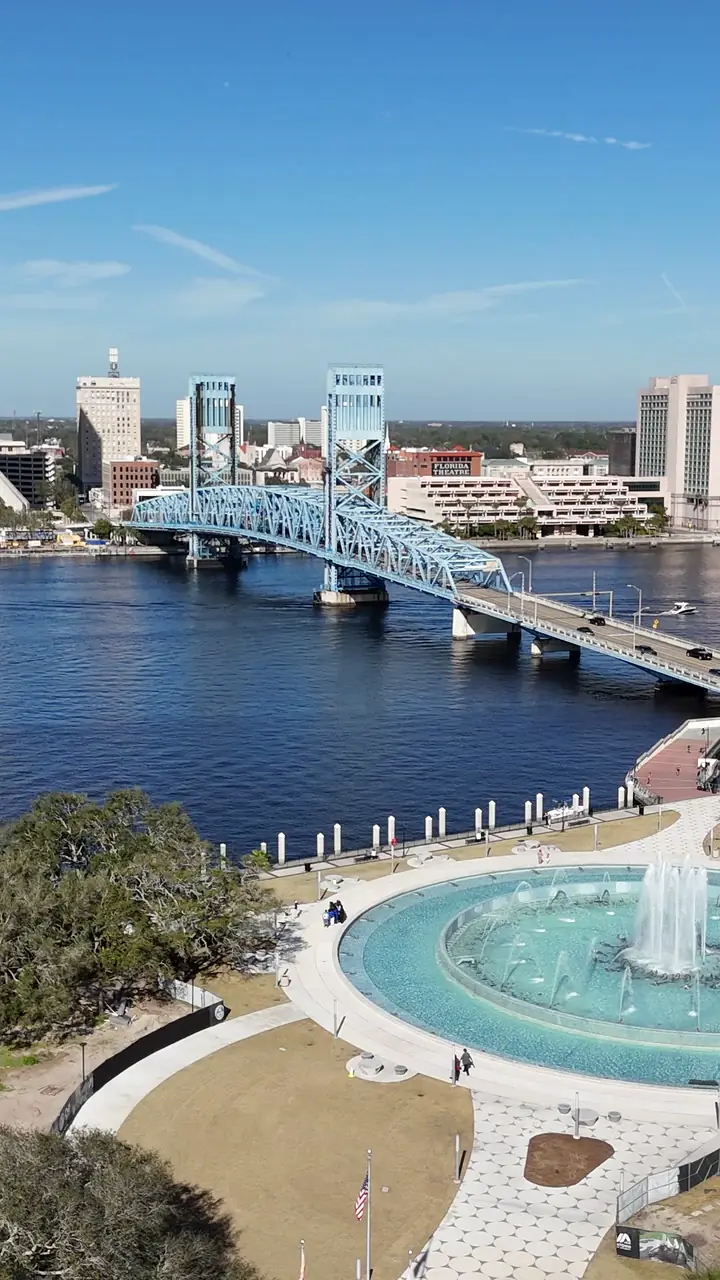
Condo & HOA Special Assessment Insurance in Jacksonville and St. Augustine
A special assessment is what an association levies when a loss lands outside the master policy: its hurricane deductible, damage above its limits, or an excluded peril such as flood, all of which are common expenses shared by every owner under FS 718.111(11)(j). A unit owner's HO-6 must carry at least $2,000 of loss assessment coverage (FS 627.714); Citizens lists that limit as one it will not increase, and standard forms separately sub-limit the share of an assessment that comes from the master policy's deductible, so the endorsement helps with small levies and rarely with a hurricane-sized one. In Jacksonville and St. Augustine the real protection sits on the association's side: a deductible the board can fund, a deductible buy-back policy, a current replacement-cost appraisal, and the lender caps (5% of coverage, $50,000 per unit) that now limit what a financed building can pass down.
Special assessments after a storm in Jacksonville and St. Augustine: how they arise, the $2,000 HO-6 loss assessment reality, and how boards keep them small.
Special assessments in Jacksonville and St. Augustine
An assessment is what arrives when the master policy's deductible, its limit or its exclusions leave a bill the operating account cannot pay. Northeast Florida boards can size that risk before the storm.
How the assessment is built here
Deductibles and damage above the master policy's limits are a common expense of the condominium (FS 718.111(11)(j)), shared by every owner, unless the association voted to opt out (FS 718.111(11)(k)).
- The hurricane deductible is the usual source. Florida's $500 / 2% / 5% / 10% menu applies to residential policies (FS 627.701(3)); on an association's commercial residential policy the carrier's filed percentage applies, and 5% of a $40 million building is a $2 million deductible before the policy pays, shared as a common expense.
- Owners' backstop is thin by design: every HO-6 must carry at least $2,000 of loss assessment coverage (FS 627.714), Citizens lists that limit as one it will not increase, and the deductible share of an assessment is separately sub-limited on standard forms.
- Lenders now cap the deductible a board can pass down: master-policy deductibles above 5% of the coverage amount or $50,000 per unit fail Fannie Mae and Freddie Mac review at unit sales, which puts a ceiling on the deductible share of any assessment in a financed building.
- The river and the coast set the flood side: the St. Johns crested at a record 5.57 feet downtown during Irma in 2017, and the association's federal flood policy carries its own limits and a 30-day wait; a common-element flood loss above those limits is assessed, not insured.
- Citizens' condo-association rates rose 7.7% (multiperil) and 14.1% (wind-only) on July 1, 2026 while the private market softened, so the 2026 renewal is the cycle to buy down the deductible instead of budgeting for the assessment.
Guides
- Florida Condo Association Hurricane Claims in 2026: Who Claims What, and When a Loss Becomes a Special Assessment
- How Much Loss Assessment Coverage Can You Actually Buy in Florida? The $2,000 Reality (2026)
Data sources
- Florida Statutes § 718.111 and § 718.112
- Florida Statutes § 627.714 (loss assessment coverage)
- Citizens Property Insurance Corporation, HO-6 Coverage Worksheet (08/26)
- Fannie Mae Selling Guide B7-3-03 (08/05/2026)
- Citizens Property Insurance Corporation, 2026 Rate and Rule Changes, commercial lines (April 30, 2026)
- National Weather Service Jacksonville, Hurricane Irma post-storm summary
Frequently Asked Questions
Can a Jacksonville condo owner buy enough loss assessment coverage to cover a hurricane-deductible assessment?
Usually not. Florida requires at least $2,000 of loss assessment coverage on every HO-6 (FS 627.714), Citizens lists that limit as one it will not increase, and standard forms separately sub-limit the share of an assessment that comes from the master policy's deductible. The practical protection is on the association's side: a lower hurricane deductible, a deductible buy-back policy, and a current replacement-cost limit, all of which the board chooses at renewal.
What is a special assessment in a Florida condo or HOA?
A special assessment is a one-time charge levied by a condominium or homeowners association against all unit owners to cover an unexpected expense that exceeds the association's reserve funds. Common triggers include major repairs after hurricane damage, roof replacement, structural remediation required by milestone inspections under SB 4-D, elevator modernization, or settlement of lawsuits. Special assessments can range from a few thousand dollars to $50,000 or more per unit depending on the scope of the work.
What is loss assessment coverage and how does it protect me?
Loss assessment coverage is an optional endorsement on your HO-6 (condo unit owner) or HO-3 (HOA homeowner) insurance policy that helps pay your share of a special assessment when the assessment results from a covered peril. For example, if a hurricane damages the building and the association levies a $20,000 per-unit special assessment to cover the master policy deductible, your loss assessment coverage would help pay your share. Standard HO-6 policies in Florida include $1,000 in loss assessment coverage, but this is almost always insufficient.
How much loss assessment coverage do I need in Florida?
As much as you can actually buy, and then the real protection on the association's side. Every Florida HO-6 must carry at least $2,000 of loss assessment coverage (FS 627.714); Citizens lists that limit as one it will not increase, and standard forms separately sub-limit the share of an assessment that comes from the master policy's deductible, so the endorsement helps with a small levy and rarely with a hurricane-sized one. Some private carriers offer higher limits; ask us which ones and read the deductible sub-limit before relying on it. The board's choices matter more: a hurricane deductible the association can fund, a deductible buy-back policy, a current replacement-cost appraisal, and the lender caps (5% of coverage, $50,000 per unit) that limit what a financed building can pass down.
Does loss assessment coverage pay for all types of special assessments?
No. Loss assessment coverage only applies when the special assessment results from a covered peril under your HO-6 policy (such as fire, wind, water damage, or liability claims). It does not cover assessments for routine maintenance, cosmetic upgrades, or deferred maintenance that is not the result of a sudden, accidental loss. For example, a special assessment to repaint the building exterior would not be covered, but a special assessment to repair hurricane damage would be.
What triggers special assessments in Florida condos after SB 4-D?
Under FS 553.899, a condominium building three habitable stories or higher must have a milestone structural inspection by December 31 of the year it reaches 30 years of age (25 years where the local building official requires it for buildings near salt water), and every 10 years after; the structural integrity reserve study under FS 718.112(2)(g) then prices the repairs the inspection finds. When reserves do not cover them, the shortfall is assessed. HB 913 (2025) gave boards more room, allowing reserves to be funded with special assessments, lines of credit or loans and a temporary pause after a milestone inspection through 2028 (FS 718.112(2)(f)), but the repair bill itself still lands on the owners. In Jacksonville's older beach and riverfront mid-rises that is where the largest assessments we see come from.
Can I finance a special assessment or does it have to be paid in full?
This depends on your association's governing documents and the board's decision. Many associations allow special assessments to be paid in installments over 12-24 months. Some associations also arrange third-party financing through banks that specialize in community association lending. However, if you cannot pay the special assessment, the association can place a lien on your unit and ultimately foreclose. Loss assessment coverage through your HO-6 policy is the best protection against unexpected special assessments from covered losses.
Related Guides
- Florida condo loss assessment coverage, explained
- How a hurricane claim becomes a condo special assessment
- SIRS compliance and Florida's structural reserve rules
- Florida condo HO-6 walls-in coverage
Get a free quote or call (904) 900-5063 — Atesa Risk Advisors, independent Florida insurance brokerage.