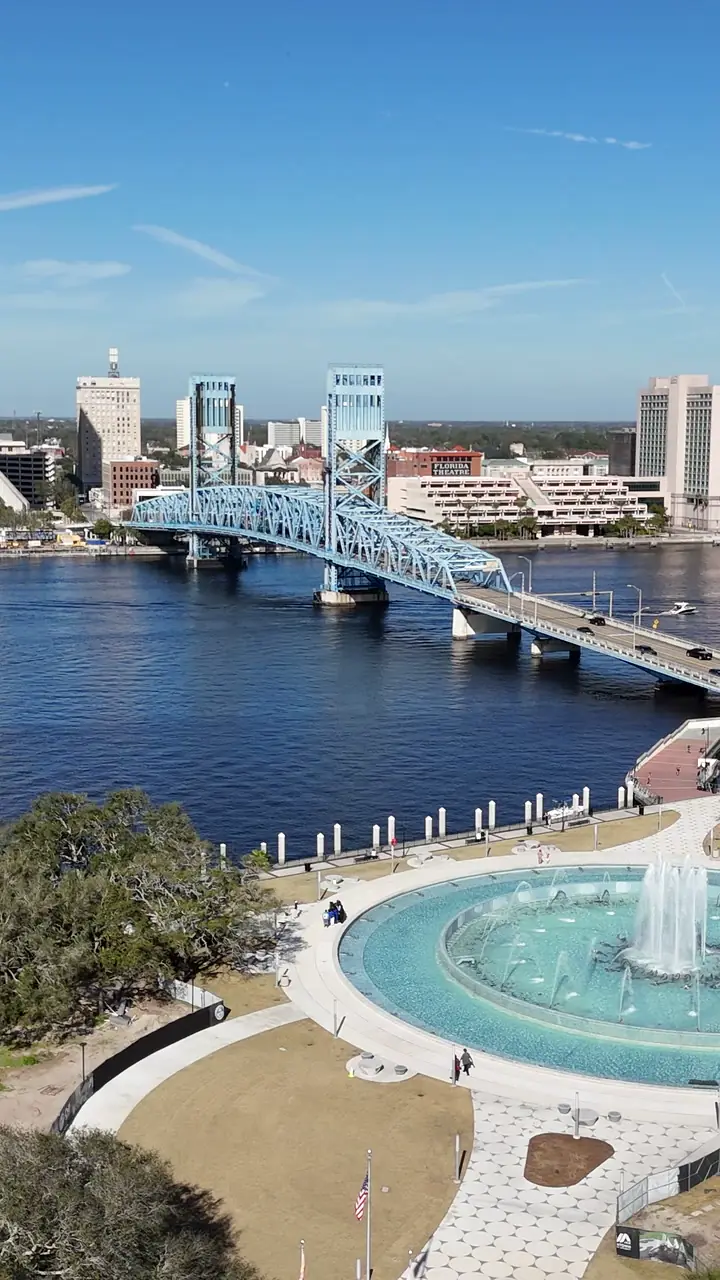
Got Non-Renewed in Jacksonville? Your 30-Day Replacement Playbook (2026)
By Ricardo Alonso, Founder, Atesa Risk Advisors · May 11, 2026 · Updated September 27, 2026
Key Takeaways
- A Florida insurer must give a business at least 45 days’ written notice before it non-renews commercial property, general liability, workers’ compensation or commercial auto coverage, and the notice must state the reason [1][2].
- The 120-day notice applies only to policies on residential structures, such as apartment buildings and condominium associations. A policy on a store, office or warehouse gets 45 days [1].
- If the insurer sends the notice late, coverage stays in effect until 45 days after the notice is given or until your replacement policy starts, whichever comes first [1].
- Statewide, admitted commercial property premium fell 9.02% in 2025 and surplus lines commercial property premium fell 6.15%, while the surplus lines policy count rose 42.3% [3].
- Our process is a single Agent of Record (AOR) letter, a complete submission and competing written quotes, with the replacement bound before the old policy expires. The worksheet in this post is the day-by-day plan.
- Citizens is rarely the answer for a Duval business. It had 12 commercial non-residential policies in Duval County on August 31, 2026, and a policy of that type that receives a private-market offer cannot stay with Citizens [4][5].
A Florida insurer must give a business at least 45 days’ written notice before it non-renews commercial property, general liability, workers’ compensation or commercial auto coverage, and the notice must state the reason. Your policy stays in force until it expires, so use those weeks to collect three written quotes and bind a replacement without a gap. The 120-day notice that many owners expect applies only to policies on residential structures, such as apartment buildings and condominium associations [1][2].
A non-renewal feels personal. Start with the reason printed on the notice, because Florida law requires one [2]. The reason tells you what the next underwriter will ask about: the roof, the loss history, the type of business, or an insurer that is leaving a line of business altogether.
At Atesa, we treat the next 30 days as a sequence: one complete submission, one broker with the authority to take it to market, and three written quotes to compare.
This post lays out the playbook day-by-day. The downloadable worksheet at the bottom is the printable version your office manager can mark up.
Download the printable worksheet → 30-Day Non-Renewal Replacement Playbook (PDF). Day-by-day actions, a quote-collection grid, and an Agent of Record letter template — print it and mark it up.
Florida non-renewal notice windows by line of business
The first thing to do when the letter arrives is check the notice against the statute. If the insurer sent it late, your coverage continues past the expiration date [1].
| Line of business | Minimum written notice of non-renewal | Statute |
|---|---|---|
| Commercial property on a non-residential building (store, office, warehouse, restaurant), including a business owners policy (BOP) | 45 days | FS 627.4133(1)(a) [1] |
| Commercial residential property (apartment building, condominium association) | 120 days | FS 627.4133(2)(b) [1] |
| Commercial general liability (CGL) | 45 days | FS 627.4133(1)(a) [1] |
| Workers’ compensation | 45 days. The policy also cannot expire until at least 30 days after notice is sent to the state and to the employer | FS 627.4133(1)(a) and FS 440.42(3) [1][6] |
| Commercial auto | 45 days | FS 627.4133(1)(a) [1] |
| Excess and umbrella liability | 45 days | FS 627.4133(1)(a) [1] |
| A property or casualty policy placed with a surplus lines insurer | 45 days | FS 626.9201(1) [7] |
Three details matter in practice. The 45-day rule applies only if you gave the insurer the information it needed to develop the renewal premium, so answer renewal questionnaires on time [1]. The notice may arrive by e-mail: for commercial policies, electronic transmission of the policy and related notices counts as delivery unless you have told the insurer that you do not agree to it [8]. And FS 627.728 does not govern business policies: it covers auto policies issued to individuals on private passenger vehicles [9].
A few quick definitions, because the letter you received may use shorthand:
- Non-renewal is the carrier’s decision not to offer terms for the next policy period. Your current policy stays in force through its expiration date.
- Cancellation mid-term is different. The insurer must give 45 days’ written notice with the reason, or 10 days when the reason is non-payment of premium. In the first 60 days of a policy the notice is 20 days in most cases. Commercial auto cancellations carry the same 45 and 10 days under FS 627.7281 [1][10].
- Renewal with changed terms is the third case. An insurer that renews with a higher deductible or a new exclusion must send a written “Notice of Change in Policy Terms”. Without it, the original terms stay in effect until the next renewal or until your replacement coverage starts [11].
If the insurer missed the 45-day window, your coverage remains in effect until 45 days after the notice is given or until your replacement coverage starts, whichever comes first, and the premium cannot go up during the extension [1]. To report a late or incomplete notice, contact the insurer first, then file an insurance concern with the Florida Department of Financial Services or call 1-877-693-5236 [12].
What changed in the 2026 replacement market
Three public sources describe the market your submission goes into: the Florida Surplus Lines Service Office, the Office of Insurance Regulation and Citizens. None publishes figures for Duval County businesses, so read them as background, not as a quote.
The changes that matter for a business policy:
- Commercial property premium fell in 2025. Admitted commercial property premium in Florida fell 9.02%, from $14.34 billion to $13.05 billion, and surplus lines premium fell 6.15%, from $7.44 billion to $6.98 billion. The surplus lines policy count rose 42.3%. These are statewide totals, not the rate change on any one building [3].
- Workers’ compensation rates fell again. The Office of Insurance Regulation approved a statewide average decrease of 6.9% for policies effective January 1, 2026, the ninth consecutive yearly decrease [13]. In 2024, 278 privately-owned insurers actively wrote workers’ compensation in Florida [14].
- Liability lawsuits changed with HB 837. The bill was approved on March 24, 2023 [15]. A plaintiff found more than 50 percent at fault for his or her own harm recovers nothing, except in medical negligence cases [16]. The deadline to file a negligence lawsuit is two years [17]. A liability insurer that tenders the policy limits, or the amount demanded if lower, within 90 days of notice of a claim with sufficient evidence cannot be sued for bad faith [18].
- One-way attorney fees ended in two steps. SB 2-A, approved on December 16, 2022, removed them in suits under residential and commercial property policies [19]. HB 837 repealed the one-way attorney fee statutes, with exceptions [20].
- The regulator reports a steadier property market, measured in residential lines. Its report of July 1, 2026 counts 21 new companies approved to write residential property policies since the reforms, and no property and casualty insurer referred for delinquency proceedings since March 1, 2023. Florida’s share of the nation’s homeowners lawsuits fell from 76.45% in 2019 to 41.29% in 2025, a preliminary figure. The report does not count insurers that write commercial property, so we do not quote a number for them [20].
- Citizens changed its commercial rates, and its exit rules are changing. For policies effective on or after July 1, 2026, its commercial non-residential rates fell by a statewide average of 1.8% (multiperil) and 5.0% (wind-only), while its commercial residential rates rose between 7.2% and 14.4% [21]. SB 1028, approved on June 16, 2026, requires Citizens to open commercial lines clearinghouses by January 1, 2027. Once they run, a surplus lines offer of comparable coverage whose total cost is no more than 15 percent above Citizens’ ends eligibility [22][23].
Two terms used below. An admitted insurer holds a certificate of authority from the Office of Insurance Regulation [23]. A surplus lines insurer, also called E&S for excess and surplus, is the specialty market for hard-to-place risks: its rates and forms are not approved by any Florida regulatory agency, and its policyholders are not protected by the Florida Insurance Guaranty Act [24].
The 30-day day-by-day playbook
This is the process we run at Atesa when a client brings us a non-renewal notice. Print the worksheet and follow along; the narrative version is below.
Week 1, Days 1–7: Read the notice, gather documents
Day 1: Open the non-renewal letter and write today’s date on the top of every page. Confirm the line of business, the stated reason and the coverage expiration date. If the notice gives no reason, ask the insurer for it in writing, because the statute requires one [2]. Count the days to expiration and compare them with the table above. This is your countdown.
Days 2–4: Pull these documents into a single folder, physical or digital:
- Current declarations page (front sheet of your policy showing limits, deductibles, premium)
- 5-year loss runs from every commercial policy you have held
- Current certificates of insurance (COIs) on file with every general contractor, landlord, lender, and municipality
- Any inspection or condition report you already have on the building: roof, electrical, plumbing, heating and cooling
- The most recent wind mitigation report, if there is one. The state form (OIR-B1-1802) is a residential form, valid for up to five years; a commercial insurer may ask for its own wind or roof documentation [25]
- Photos of the property, fleet, or operations
- Your latest profit-and-loss statement (used by underwriters to verify revenue and payroll)
Day 5: If you are a Florida-licensed contractor, list the certificate of insurance (COI) requirements in every contract you have under way. Proof of workers’ compensation coverage is also required each time you apply for a building permit [26].
Days 6–7: Email the assembled package to your broker. When the package is complete, we aim to come back with a market plan within 48 hours.
Week 2, Days 8–14: Fire off submissions
Day 8: Sign one AOR (Agent of Record) letter. The template is on Sheet 2 of the worksheet. An AOR letter names the one broker who represents you with an insurer and replaces any earlier letter. In our experience, when two brokers submit the same account the insurer blocks the submission until it knows which broker represents you.
Days 9–12: We submit your package to admitted insurers first and to surplus lines insurers where the account needs them. Citizens is an option only for property coverage, and only for an owner who cannot find it in the private market [27]. Expect a mix of declinations, indications (preliminary numbers) and firm quotes. Three firm quotes is our floor.
Days 13–14: Order anything the underwriters have asked for, such as a roof condition report, an updated wind report or an electrical inspection. Order early: a quote cannot be firmed up until the report is back.
Week 3, Days 15–21: Review quotes, negotiate
Day 15: Lay the three quotes side by side on one sheet. The comparison must include all of: premium, deductible, coinsurance percentage (the share of the property’s value you must insure to be paid in full on a partial loss), sub-limits (especially on Ordinance or Law, which pays the added cost of rebuilding to current code, business income, equipment breakdown and employee dishonesty), and named exclusions.
Days 16–18: Negotiate the holes. If quote A is cheaper but excludes equipment breakdown, ask carrier A to add it back. If quote B is more expensive but carries the right additional-insured endorsements (the wording that extends your liability coverage to a general contractor or landlord) for your active GC contracts, that is often a better total-cost outcome.
Days 19–20: Confirm continuity of additional-insured endorsements. A general contractor whose contract calls for primary-and-non-contributory wording will reject a certificate that lacks it, and that can stop your work on the site. The new insurer must match or exceed your current endorsement schedule.
Day 21: We ask the insurer behind your preferred quote to hold it for 60 to 90 days. Whether it agrees depends on the account, so ask us how long each quote is valid before you decide.
Week 4, Days 22–30: Bind, file, notify
Day 22: Sign the application. Wire or mail the premium deposit. Bind the replacement policy with an effective date that matches or precedes your current expiration date. No gap, no excuse.
Days 23–25: We issue updated certificates of insurance to every GC, landlord, lender and municipality on your list, normally within 48 hours of binding.
Days 26–28: If you are a licensed contractor, file the new certificates with your license records. The insurance affidavit is part of each license renewal [28].
Days 29–30: Set a calendar reminder 90 days before the new policy renews. If the new insurer asks for a loss-control visit, schedule it in the first three months and act on its recommendations.
Decision matrix: which market is right for your account
Not every Duval commercial risk belongs in the same market. This grid is the rough screen we use on day 8. It reflects our judgment, not a rule, and the insurer’s underwriter has the final word.
| Account profile | Best-fit market | Why |
|---|---|---|
| Inland Duval, single location under $2M TIV (total insured value), clean 5-year loss runs | Admitted insurer | An insurer authorized by the state regulator, and no surplus lines tax on the premium [29] |
| Coastal exposure (Jax Beach, Atlantic Beach, Mayport) or an older roof | Admitted insurer first; surplus lines (E&S) if none will quote | Wind exposure and roof condition decide whether an admitted insurer will quote |
| Recent named-storm claim or open litigation | Surplus lines (E&S) | In our experience admitted insurers are reluctant. The surplus lines premium carries a 4.94% tax, and the guaranty act does not apply [29][24] |
| Workers’ compensation non-renewal | Another admitted insurer | 278 privately-owned insurers actively wrote workers’ compensation in Florida in 2024 [14] |
| Contractor with general liability and auto, and several general contractors that require additional-insured status | One admitted package where we can get it (liability, workers’ compensation and commercial auto) | Fewer policies to coordinate when certificates and endorsements are issued |
| Older wiring, plumbing or HVAC, or a known code-compliance issue | Surplus lines for the property; admitted for liability and workers’ compensation | Insurers’ appetite differs by line, so we shop each line separately |
What we see on the ground in Duval
“The biggest mistake I see Jacksonville business owners make in the first week is calling four brokers and signing four AOR letters. The carriers see the same submission four times and block all of them — it adds 30 days to a 30-day clock. Pick one broker, give them an exclusive shot at the market for two weeks, then assess. If they cannot deliver three written quotes by Day 14, then change brokers. Multi-broker shopping does not speed up a Duval non-renewal — it slows it down.”
— Ricardo Alonso, Founder, Atesa Risk Advisors
Florida-Specific Considerations
A few Florida rules that come up in a Duval commercial non-renewal:
Florida Statute 627.4133: 45 days for business policies, 120 days for residential buildings. The 120-day notice belongs to personal lines and commercial residential property policies, which the statute lists as homeowner, mobile home owner, farmowner, condominium association, condominium unit owner, apartment building, or other policy covering a residential structure or its contents. Every other property, casualty and workers’ compensation policy gets 45 days [1].
Florida Statute 627.4091: the reason comes with the notice. Each notice of non-renewal or cancellation must be accompanied by the specific reasons, and you do not have to request them [2]. A claim that results from an act of God, a hurricane for example, may not be used as a cause for non-renewing a property policy unless the insurer can show that you failed to take action it reasonably requested to prevent a repeat [1].
Florida Statute 440.42: workers’ compensation. A policy cannot expire or be canceled until at least 30 days after the insurer has sent notice to the Department of Financial Services and to the employer. When the reason is non-payment of premium, the insurer must mail notice to the employer at least 10 days before the cancellation date [6]. The residual market, the insurer of last resort, is the Florida Workers’ Compensation Joint Underwriting Association [14].
Citizens eligibility under FS 627.351(6) and FS 627.3518. Citizens’ commercial policies insure buildings and business property for owners who cannot find coverage in the private market; they do not replace a liability, workers’ compensation or auto policy [27]. For a commercial residential risk, such as an apartment building, an offer from an authorized insurer priced no more than 20 percent above the Citizens premium ends eligibility [30]. A commercial non-residential policy has no 20 percent cushion: if it receives a private-market offer, it cannot stay [5]. On August 31, 2026, Citizens had 2,448 commercial non-residential policies statewide and 12 in Duval County [4].
Florida Market Assistance Plan (FMAP). This free referral service gives direct referrals by phone at 800-524-9023 for commercial residential, commercial non-residential and liability coverage. It is not available for workers’ compensation, employer’s liability, malpractice or motor vehicle coverage [31].
Contractor licensing (FS 489.115) and workers’ compensation enforcement (FS 440.107). Contractors attest by affidavit, at initial licensing and at each renewal, that they carry workers’ compensation, public liability and property damage insurance in the amounts set by board rule [28]. An employer that fails to secure workers’ compensation can be served a stop-work order that halts all business operations, plus a penalty of twice the premium it would have paid for the preceding 12 months or $1,000, whichever is greater [32].
Your 30-Day Replacement Timeline
| Step | Days | What happens |
|---|---|---|
| 1. Read the notice and verify the statutory window | Day 1 | Check the notice against FS 627.4133: 45 days for a business policy, 120 days for a residential building. Confirm that it states the reason. Calculate your hard deadline [1][2]. |
| 2. Gather declarations, loss runs, COIs, and inspections | Days 2–7 | Build one submission package. Include the inspection, roof and wind reports you already have. |
| 3. Sign one AOR letter and submit to the admitted and E&S markets | Days 8–10 | One broker only. In our experience a second submission of the same account stalls the first. |
| 4. Collect three firm written quotes and rating documentation | Days 11–14 | AM Best or Demotech rating in writing before any binding decision. |
| 5. Compare total cost — premium, deductible, sub-limits, exclusions | Days 15–18 | Lowest premium is rarely lowest total cost. |
| 6. Confirm additional-insured continuity for active GC contracts | Days 19–21 | Match or exceed current endorsement schedule. We request a 60- to 90-day hold on the quote. |
| 7. Bind with no gap, issue new COIs, update license records if applicable | Days 22–30 | New effective date matches or precedes the old expiration date. Contractors: keep proof of workers’ compensation coverage ready for the next permit application [26]. |
FAQ for Jacksonville business owners
Q: My non-renewal letter does not give a reason. Can I demand one?
A: Yes. Florida law requires each notice of non-renewal to be accompanied by the specific reasons, including the specific underwriting reasons if they apply, on property, liability, auto and workers’ compensation policies alike. If yours has none, ask the insurer in writing and keep a copy [1][2].
Q: How much will my replacement policy cost compared to the non-renewed one?
A: No public source tracks replacement quotes for Duval County businesses, so we do not publish a range. Statewide, admitted commercial property premium fell 9.02% in 2025, and workers’ compensation rates fell 6.9% on January 1, 2026. Your quote depends on the building, the loss history and the type of business [3][13].
Q: Can I just move to Citizens?
A: Only for property coverage, and only if you cannot find it in the private market. Citizens had 12 commercial non-residential policies in Duval County on August 31, 2026, and a policy of that type that receives a private-market offer cannot stay. Liability, workers’ compensation and auto must be placed with private insurers [4][5][27].
Q: What if I cannot replace coverage before the expiration date?
A: Ask the non-renewing insurer in writing for an extension, and ask your broker whether a surplus lines policy can cover the gap while admitted quotes are pending. Surplus lines premium carries a 4.94% tax, and the Florida Insurance Guaranty Act does not protect those policyholders. If the notice was late, your coverage continues by law [1][24][29].
Q: Will a non-renewal show up on my future applications?
A: Expect the question: the applications we submit ask about prior cancellations and non-renewals. Answer accurately, because under FS 627.409 a misrepresentation that is fraudulent or material to the risk can prevent recovery under the policy. A non-renewal with a stated reason and a documented fix is something the next underwriter can evaluate [33].
Q: My contractor license requires proof of coverage. What happens if there is a gap?
A: Bind the new policy with an effective date on or before the old expiration date. Florida requires proof of workers’ compensation coverage with every building permit application, and an employer without coverage can be served a stop-work order that halts all business operations. The license rests on an insurance affidavit at each renewal [26][32][28].
Q: I had a hurricane claim two years ago. Will admitted carriers even look at me?
A: It depends on the claim and the repairs. An insurer may not use a claim caused by an act of God as a cause for non-renewing a property policy unless you failed to take steps it reasonably requested to prevent a repeat. In our experience a closed claim with completed repairs is easier to place than an open one [1].
Q: Should I file a complaint with the state?
A: Contact the insurer first. If the notice came late, gave no specific reason, or cited an act-of-God claim as the cause, file an insurance concern with the Florida Department of Financial Services or call 1-877-693-5236. Keep shopping for replacement coverage while the concern is open [1][2][12].
Related Reading
- The 2026 Green Cove Springs Business Insurance Guide — building a commercial program in Clay County's new growth corridor.
- How to Lower Your Condo HOA Insurance in Duval County: The 2026 Market Guide — The Duval market overview for condominium associations.
- 5 Insurance Mistakes Florida Business Owners Make — The annual-review checklist that prevents the panic renewal next year.
- Small Building, Big Deadlines: The 2026 Survival Guide for 25-50 Unit Condo Boards — Companion piece for the boutique-condo segment of the same market.
- How to Lower Commercial Property Insurance in Duval County: The 2026 Market Guide — The renewal audit for Duval office, retail and industrial buildings.
- Is Your Jacksonville Business Sitting on a $250,000 Hurricane Deductible? How a Deductible Buyback Works — How a deductible buyback policy works alongside a percentage named-storm deductible.
- Florida Apartment Building Insurance in 2026 — the multifamily market turn, named-storm math, and the FS 768.0706 security checklist
- How Much Does Shopping Center & Strip Mall Insurance Cost in Florida? (2026) — the renewal plan that keeps a plaza out of the non-renewal pile: start 120 days out, build the roof file, do the deductible math.
- Commercial Roof Age and Insurance in Florida: When the Roof Decides Your Plaza's Renewal (2026) — the twelve-month roof file that keeps an older plaza roof out of the non-renewal pile.
How Atesa Risk Advisors Can Help
Print the worksheet first → Download the 30-Day Non-Renewal Replacement Playbook. Two sheets: the day-by-day timeline and the quote grid plus AOR letter template.
Atesa is a Florida independent insurance brokerage that places Duval commercial accounts in the admitted and surplus lines (E&S) markets, and with Citizens when a property account qualifies. When a non-renewal letter lands, the playbook above is what we run: one AOR letter, one broker, three firm quotes inside 14 days, bound replacement inside 30.
If you are reading this with a non-renewal letter on your desk, the fastest thing you can do today is download the worksheet and call us. The notice period is already running, so the sooner the submission goes out, the more of the market we can approach before your policy expires. Our Jacksonville insurance page covers how we place local commercial accounts.
Just received a non-renewal notice on your Jacksonville commercial policy? Get your free quote and consultation at atesariskadvisors.com/get-quote or call (904) 900-5063.
Sources
[1] Florida Statutes 627.4133: Notice of cancellation, nonrenewal, or renewal premium
[2] Florida Statutes 627.4091: Specific reasons for denial, cancellation, or nonrenewal
[4] Citizens Property Insurance Corporation, Policies in Force: Detail by County, August 31, 2026
[5] Citizens Property Insurance Corporation, Depopulation: Commercial Lines
[6] Florida Statutes 440.42: Insurance policies; liability (workers' compensation)
[7] Florida Statutes 626.9201: Notice of cancellation or nonrenewal (surplus lines)
[8] Florida Statutes 627.421: Delivery of policy
[9] Florida Statutes 627.728: Cancellations; nonrenewals (private passenger auto)
[10] Florida Statutes 627.7281: Cancellation notice (motor vehicle policies outside 627.728)
[11] Florida Statutes 627.43141: Notice of change in policy terms
[12] Florida Department of Financial Services, Division of Consumer Services: Get Insurance Help
[14] Florida Office of Insurance Regulation, 2025 Workers' Compensation Annual Report (January 2026)
[15] Florida Senate, CS/CS/HB 837 (2023): Civil Remedies, Chapter 2023-15
[16] Florida Statutes 768.81: Comparative fault
[17] Florida Statutes 95.11: Limitations other than for the recovery of real property
[18] Florida Statutes 624.155: Civil remedy
[19] Chapter 2022-271, Laws of Florida (SB 2-A, Property Insurance)
[20] Florida Office of Insurance Regulation, Property Insurance Stability Report, July 1, 2026
[22] Florida Senate, CS/CS/SB 1028 (2026): Citizens Property Insurance Corporation, Chapter 2026-150
[23] Florida Statutes 627.3518: Citizens policyholder eligibility clearinghouse program
[24] Florida Statutes 626.916: Eligibility for export (surplus lines disclosure)
[25] Florida Office of Insurance Regulation, Wind Mitigation Resources
[26] Florida Statutes 440.103: Building permits; proof of workers' compensation coverage
[27] Citizens Property Insurance Corporation, Commercial Policies
[28] Florida Statutes 489.115: Certification and registration of contractors
[29] Florida Statutes 626.932: Surplus lines tax
[30] Florida Statutes 627.351: Insurance risk apportionment plans (Citizens)
[31] Florida Market Assistance Plan: Consumers
[33] Florida Statutes 627.409: Representations in applications; warranties
Ricardo Alonso is the Founder of Atesa Risk Advisors, a Florida independent insurance agency. Licensed 2-20 General Lines Agent and 2-15 Health & Life Agent, with a Master of Liberal Arts in Finance from Harvard University. Ricardo has placed and replaced commercial coverage for Jacksonville-area contractors, condo associations, professional services firms, and STR operators since the post-Ian carrier exits began in 2022.