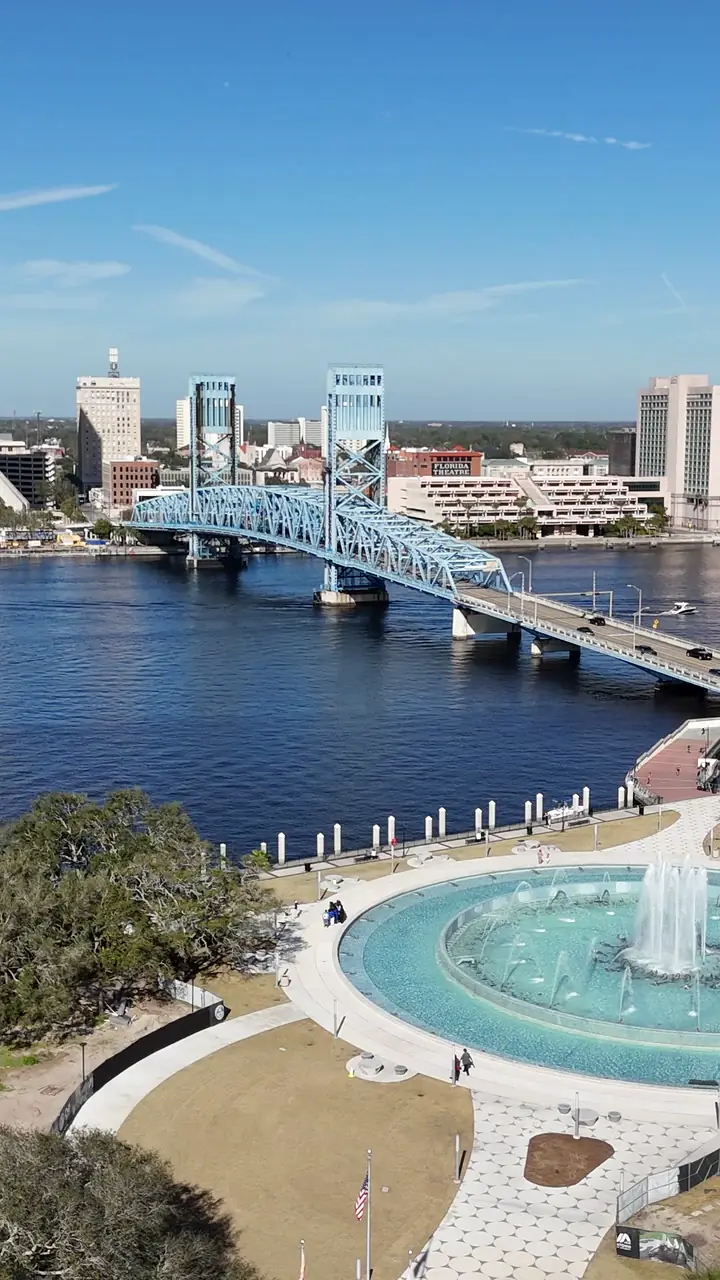
Duval County Homeowners Insurance in 2026: The Citizens Rate Cut, Beach Flood Discounts, and How to Shop Your Renewal
By Ricardo Alonso, Founder, Atesa Risk Advisors · September 15, 2026
Key Takeaways
- Citizens approved an average 5.0% HO-3 rate decrease for Duval County, effective July 1, 2026 for new business and applying to renewals after that date — smaller than the statewide 8.7% average cut [1]
- Across all Citizens personal lines, Duval's approved change is −6.8%; neighboring Nassau (−10.9% HO-3), St. Johns (−8.2%), Clay (−6.5%), and Flagler (−8.6%) received deeper cuts [1]
- Jacksonville and the Duval Beach communities hold CRS Class 6, worth 20% off NFIP flood premiums; under the NFIP's current pricing the full discount applies in every flood zone, Zone X included [2][3]
- Wind-mitigation credits are mandatory under FS 627.0629 once documented on the state's inspection form, and many Duval homes have never filed one [4]
- Citizens personal residential policyholders must carry flood insurance by January 1, 2027 under the final phase of the 2022 reform law [5]
- You have one year to report a new claim and 18 months for a supplemental claim under FS 627.70132 [6]
Duval County homeowners insurance in 2026 turns on two numbers: the average 5.0% rate decrease Citizens approved for Duval HO-3 policies — effective July 1, 2026, applied at renewal rather than mid-term — and the 20% flood-insurance discount that Jacksonville's CRS Class 6 rating earns on every NFIP policy in the city [1][2]. Both are set before an agent ever touches your file. Your address does the pricing. What follows is the lookup work: the county rate table, the community discount table, and the renewal sequence I run for Duval clients.
Duval is the largest county in Northeast Florida and, for insurance purposes, the most misread. The city and the county consolidated their governments decades ago, so "Jacksonville" and "Duval" get used interchangeably — but Atlantic Beach, Neptune Beach, Jacksonville Beach, and Baldwin remained separate municipalities, and flood-program ratings attach to the municipality, not the county. Two houses ten minutes apart can carry different flood discounts because they sit under different community ratings. That detail decides real dollars, and almost nobody checks it.
Florida Politics reported that the 2026 filing is Citizens' first overall rate decrease since 2015 [7]. That makes this renewal cycle worth actual attention instead of the usual sigh-and-sign.
What Citizens' 2026 Rate Cut Does in Duval
Citizens — Florida's state-backed insurer of last resort — filed its 2026 rate changes in 2025, and the approved decreases took effect July 1, 2026 for new business, reaching each existing policy at its first renewal after that date [1]. If your renewal came up in August, the new rate is already on it. If you renew next spring, you are still waiting.
The approved changes for Northeast Florida [1]:
| County | HO-3 (single-family) | All personal lines |
|---|---|---|
| Duval | −5.0% | −6.8% |
| St. Johns | −8.2% | −7.7% |
| Clay | −6.5% | −7.4% |
| Nassau | −10.9% | −8.7% |
| Flagler | −8.6% | −6.6% |
| Statewide average | −8.7% | — |
Two things to read out of that table. First, these are county averages — your individual change depends on construction, roof age, wind credits, and coverage amount, so some Duval policies will see more than 5.0% and some will see an increase. Second, Duval's cut is the shallowest in the region. Citizens prices by territory, and Duval's mix of older housing stock and river exposure earns it less relief than Nassau or St. Johns.
I am not telling you to leave Citizens over a shallow cut. For some Duval homes — older roofs, prior claims, proximity to the river — Citizens is still the right placement. What the table tells you is that the private market is repricing Northeast Florida, and a Duval homeowner who has not run a comparison since 2023 is shopping against a different market than the one that non-renewed them.
Your Community Sets Your Flood Discount
The National Flood Insurance Program runs a scoring system called the Community Rating System (CRS) — a program that grades local floodplain management and converts the grade into a premium discount for every NFIP policy in that community. Class 1 is the best grade; Class 9 is the entry level. Jacksonville and the Duval beach communities currently rate Class 6 [2][3]:
| Community | CRS class | NFIP discount (all zones under Risk Rating 2.0) |
|---|---|---|
| Jacksonville (consolidated Duval) | 6 | 20% |
| Jacksonville Beach | 6 | 20% |
| Atlantic Beach | 6 | 20% |
| Neptune Beach | 6 | 20% |
| Baldwin | Confirm on FEMA's CRS list | — |
The discount applies automatically to NFIP policies — you do not file anything. But you should verify the class on your declarations page, because your address does the pricing, and I have seen policies rated under the wrong community after an annexation or a mailing-address quirk. Baldwin residents in particular should confirm participation on FEMA's current CRS eligible-communities list [2] before assuming a discount.
If you carry private flood insurance instead of NFIP, the CRS discount does not apply — private carriers price their own way. That is not a reason to avoid private flood; it is a reason to compare both with the discount included.
Look Up Your Flood Zone Before Your Renewal
Every Duval flood conversation starts with the zone, and the zone is a five-minute lookup:
- FEMA Map Service Center (msc.fema.gov): enter your address, open the current Flood Insurance Rate Map (FIRM), and note the zone — X, AE, or VE [8].
- JaxGIS, the city's mapping tool at maps.coj.net, overlays flood zones on parcels for the consolidated city [3].
- Compare what you find against the flood zone printed on your policy or lender documents. Mismatches happen, and they are correctable.
Zone X does not mean no flood risk — it means the mapped annual risk is below the federal threshold. Tropical Storm Arthur made that point along the St. Johns River, where homes outside mapped high-risk zones in San Marco and Riverside took water. I wrote about that surge gap separately; the short version is that river-adjacent Duval homes should price flood coverage whatever the map says.
The January 1, 2027 Deadline for Citizens Policyholders
The 2022 reform law (SB 2-A) added a flood-insurance requirement to Citizens personal residential policies, phased in by dwelling value, with the final phase reaching all personal residential policies on January 1, 2027 [5]. If you hold a Citizens policy on a Duval home and have been putting off flood coverage, this is the renewal cycle to solve it — the requirement lands regardless of flood zone, and waiting until December compresses your options. The CRS table above is the silver lining: inside Jacksonville and the Beaches, the NFIP quote already carries the Class 6 discount.
The Credits Sitting Unclaimed
Florida law requires insurers to give premium credits for construction features that resist windstorm damage — hip roofs, roof-deck attachment, secondary water resistance, opening protection — once they are documented on a wind-mitigation inspection (the state form is OIR-B1-1802) [4]. The credits are not optional for the carrier; they are mandatory once filed. The inspection is the homeowner's move, and in my experience it is the most commonly skipped step in Duval, especially on homes built before 2002 where nobody assumes credits exist. Homes built to the post-2002 Florida Building Code usually qualify for several credits by default — but the carrier still needs the form.
I reviewed a Westside renewal this summer where the house had a hip roof and third-nail deck attachment, and the policy carried zero wind credits — the form had simply never been filed. One inspection changed the premium enough to cover the inspection many times over in the first year.
— Ricardo Alonso, Founder, Atesa Risk Advisors
While you are at it, check the claim clock: under FS 627.70132 you have one year from the date of loss to report a new claim and 18 months for a supplemental claim [6]. The old two- and three-year windows are gone. After any storm, report first and sort out severity later.
Your 5-Step Renewal Timeline
| Step | When | What to do |
|---|---|---|
| Pull your renewal and check the rate change | 45+ days before renewal | Confirm whether the 2026 Citizens decrease (or your private carrier's filing) reached your policy |
| Look up your flood zone and CRS class | 40 days out | FEMA Map Service Center and JaxGIS; verify the community on your declarations page |
| Order a wind-mitigation inspection | 35 days out | Form OIR-B1-1802; send it to your agent the day it arrives |
| Run a full market comparison | 30 days out | Citizens eligibility, private carriers, and both NFIP and private flood quotes |
| Bind changes before renewal | 10 days out | Avoid gaps; never let a policy lapse while shopping |
FAQ for Duval Homeowners
Q: How much did Citizens lower rates in Duval County for 2026?
A: Citizens' approved 2026 change for Duval is an average decrease of 5.0% on HO-3 single-family policies and 6.8% across all personal lines, effective July 1, 2026 for new business and at renewal for existing policies [1]. Individual results vary by home.
Q: When will I see the Citizens decrease on my Jacksonville policy?
A: At your first renewal after July 1, 2026. Rate changes never apply mid-term, so a policy renewing in June 2027 waits the full cycle [1].
Q: What is Jacksonville's CRS rating and what is it worth?
A: Jacksonville rates Class 6 in FEMA's Community Rating System, worth 20% off NFIP flood premiums. Under the NFIP's current pricing the full class discount applies to every policy in the community, in high-risk zones and Zone X alike. The Beach communities also rate Class 6 [2][3].
Q: Do I need flood insurance in Duval County if I'm in Zone X?
A: It is not federally required in Zone X, but Zone X only means mapped risk below the federal threshold. River-adjacent neighborhoods outside high-risk zones have flooded, and Zone X premiums are comparatively low, with the full 20% CRS discount applied.
Q: Do Citizens policyholders in Jacksonville have to buy flood insurance?
A: Yes — the phased requirement from SB 2-A reaches all Citizens personal residential policies on January 1, 2027, regardless of flood zone [5].
Q: How do I find my flood zone in Jacksonville?
A: Enter your address at FEMA's Map Service Center (msc.fema.gov) for the official FIRM, or use the city's JaxGIS mapping tool; then confirm the zone your policy actually lists [8].
Q: What does a wind-mitigation inspection do to my premium?
A: It documents wind-resistant features on form OIR-B1-1802, and Florida law makes the resulting credits mandatory for the insurer [4]. The savings depend on your roof and construction; homes built after 2002 usually qualify for several credits.
Q: How long do I have to file a hurricane claim in Florida?
A: One year from the date of loss for a new claim, 18 months for a supplemental claim, under FS 627.70132 [6].
Related Reading
- Citizens Insurance Rate Decrease 2026: What the Cut Actually Means at Your Renewal — the statewide view of the same filing
- Jacksonville Flood Insurance After Tropical Storm Arthur — the St. Johns River surge gap in San Marco, Riverside, and Brooklyn
- The Citizens Flood Deadline: Before January 1, 2027 — the full phase-in schedule and what qualifies
- Clay County Homeowners Insurance in 2026 — the neighbor-county comparison
How Atesa Risk Advisors Can Help
We are an independent brokerage based in Northeast Florida, which means we quote Duval homes across the admitted market, the surplus lines market, Citizens when it is genuinely the right placement, and both NFIP and private flood — with the CRS discount and wind credits actually applied. The county rate table above is the market average; our job is finding where your specific address beats it.
I cannot tell you whether a storm crosses the First Coast this season. I can tell you exactly what your policy will do if one does — and the time to find out is before your renewal date, not after a claim.
Ready to compare your Duval renewal? Get your free quote and consultation at atesariskadvisors.com/get-quote or call (904) 900-5063.
Sources
[1] Citizens Property Insurance Corporation — 2026 Rate Information
[2] FEMA — Community Rating System
[3] City of Jacksonville — Floodplain Management/floodplain-management)
[4] Florida Statutes § 627.0629 — Residential property insurance; rate filings (wind mitigation credits)
[6] Florida Statutes § 627.70132 — Notice of property insurance claim
[7] Florida Politics — Citizens Insurance recommending rate cuts for many policyholders in 2026
External Resources for Duval homeowners:
- Florida Division of Emergency Management — Community Rating System
- FEMA Map Service Center — flood zone by address
Ricardo Alonso is the Founder of Atesa Risk Advisors, a Florida independent insurance agency. Licensed 2-20 General Lines Agent and 2-15 Health & Life Agent, with a Master of Liberal Arts in Finance from Harvard University. He places homeowners, flood, and wind coverage across Duval and the surrounding Northeast Florida counties.
Educational disclaimer: This article is general educational information about insurance and is not insurance advice, a quote, or an offer of coverage. Rates, discounts, deadlines, and requirements change and vary by property; confirm current figures with primary sources and a licensed agent before relying on them. Coverage is subject to the terms of your policy. For a personalized review, contact Atesa Risk Advisors, an independent, RamseyTrusted brokerage licensed in Florida (2-20 General Lines).