Jacksonville Flood Insurance After Tropical Storm Arthur: The St. Johns River Surge Gap in San Marco, Riverside, and Brooklyn (2026)
By Ricardo Alonso, Founder & Principal Agent, Atesa Risk Advisors · July 21, 2026 · Updated September 22, 2026
Key Takeaways
- Tropical Storm Arthur, the first named storm of the 2026 season, spared Jacksonville in mid-June — but local meteorologists used it to repeat a hard truth: because the St. Johns River runs through the middle of the city, a storm does not have to hit Duval County to flood it. [1]
- Most Jacksonville homes that take on water are not in a federally mapped high-risk flood zone, so no lender requires flood insurance — and many owners have none when the river backs up. [8]
- A standard homeowners policy (an HO-3) never pays for rising water or storm surge. Flood is always a separate policy, written through the National Flood Insurance Program (NFIP) or a private flood carrier. [8]
- Riverfront and creek-corridor neighborhoods — San Marco, Riverside and Avondale, and the Brooklyn/McCoy's Creek basin — have documented, repeat flooding regardless of the zone printed on their map. [3][5]
- NFIP building coverage stops at $250,000 for a single-family home; many Jacksonville homes are worth more than that, leaving a rebuild gap that only private flood insurance closes. [8]
- Jacksonville takes part in FEMA's Community Rating System, which lowers NFIP premiums citywide — a discount a lot of buyers never think to ask about. [6]
- Every new flood policy carries a standard 30-day waiting period, so buying once a storm is named is too late. [8]
Do Jacksonville homeowners need flood insurance in 2026? For most, the honest answer is yes — and not because a map orders it. Jacksonville's flooding is driven by the St. Johns River backing up under storm surge and heavy rain, which regularly floods homes in low-risk zones where no lender demands coverage. Your homeowners policy excludes flood entirely. A separate NFIP or private flood policy is the only thing that pays to dry out, repair, and rebuild after river or creek water gets into your home.
Why Jacksonville floods when the storm misses
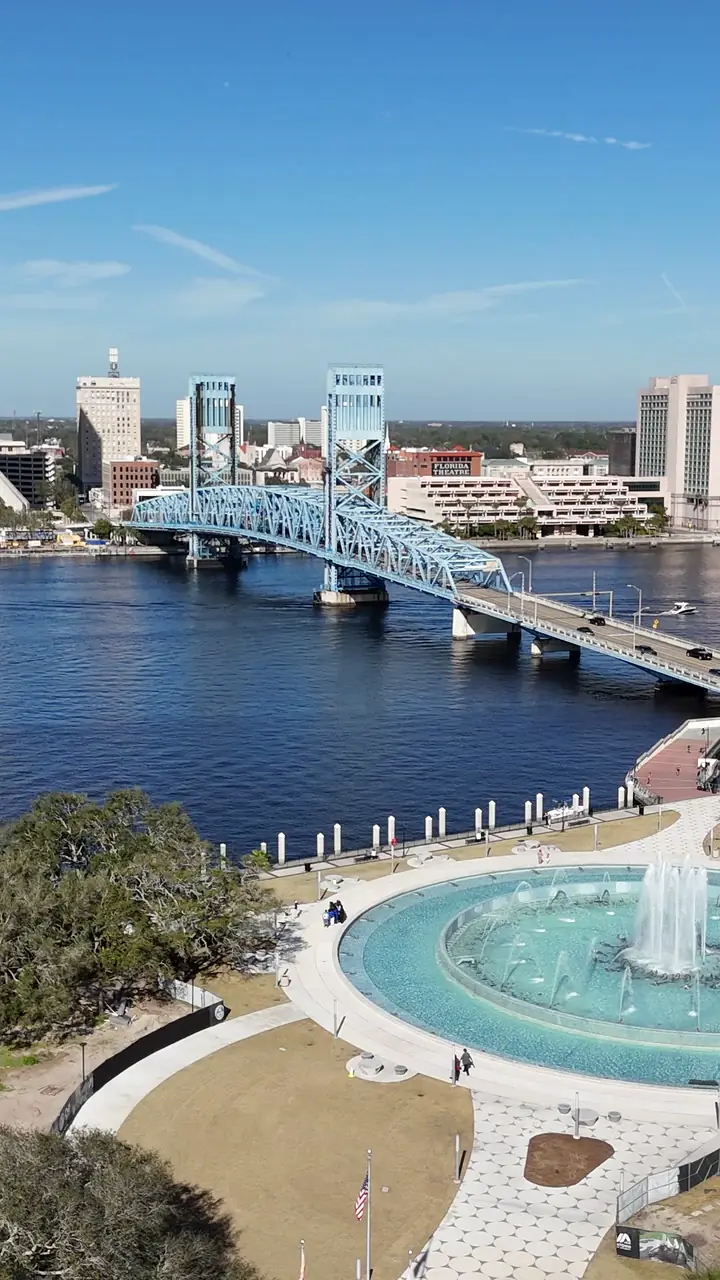
Most of Florida worries about the coastline. Jacksonville has to worry about a river. The St. Johns is one of the few major rivers in North America that flows north, and it widens into a broad basin as it passes through downtown before emptying into the Atlantic at Mayport. When a tropical system parks offshore and pushes the ocean toward that river mouth, the water has nowhere to go but up and inland — into San Marco, into Riverside, into the creeks that feed the river.
That is why Jacksonville has flooded badly from storms that never came close. Hurricane Matthew in 2016 and Hurricane Irma in 2017 both put water in Jacksonville streets and living rooms without making landfall anywhere near Duval County. The damage came from surge riding up the St. Johns and its tributaries, not from wind. For a homeowner, the lesson is blunt: the storm can be a county away, or a state away, and your first floor can still flood.
Tropical Storm Arthur was June's warning shot
In mid-June 2026, Tropical Storm Arthur formed as the first named storm of the Atlantic season. News4Jax and Jacksonville Today reported that Arthur tracked toward the Gulf and largely spared Northeast Florida. [1][2] But local coverage paired the near-miss with the same warning residents have heard for years: Jacksonville's geography and the St. Johns River leave it exposed to hurricane-driven flooding even when a storm's center is far away.
A near-miss in June buys time, nothing more. The 2026 season's dangerous months — late August through October — are still ahead, and a flood policy bought after a storm is named will not be in force in time. If you have been meaning to price flood coverage, the quiet stretch after a near-miss is exactly when to do it.
The "Zone X" gap that leaves owners uncovered
FEMA divides the map into a Special Flood Hazard Area (SFHA) — the high-risk zones, usually labeled A or V, where a federally backed mortgage requires flood insurance — and everything else, most of which is labeled Zone X, meaning lower risk. If your home sits in Zone X, no lender makes you buy flood coverage, and many owners take that to mean they do not need it.
But "lower risk" is not "no risk." FEMA's own estimate has long held that a large share of flood claims come from outside the high-risk zones. [8] In a river-and-creek city like Jacksonville, a heavy rain event or a surge pulse can push water blocks beyond the mapped SFHA line. The mandatory-purchase rule protects the lender's collateral; it was never designed to tell you whether your specific street floods. Plenty of Jacksonville homes that flooded in recent storms were sitting comfortably in Zone X with no coverage at all.
Neighborhood by neighborhood
San Marco
San Marco's walkable core sits low and close to the river, and its flooding is well documented. First Coast News has reported on San Marco residents pressing the City Council over repeat street flooding, and on a City drainage project — reported at roughly $20 million — aimed at the neighborhood's chronic problem areas. [5] Infrastructure work will help over time, but it does not retroactively cover a home that floods before the pumps and pipes are finished. If you own in San Marco, flood insurance is not a map question; it is a when question.
Riverside, Avondale, and the Westside
The historic Riverside and Avondale neighborhoods hug the St. Johns, and the low-lying Westside behind them has seen excessive flooding during heavy rain events. Older homes here carry a second wrinkle: many were built before modern floodplain elevation standards, so their lowest floors can sit below today's base flood elevation — the height floodwater is expected to reach in a major event. That gap between how a home was built and where the water goes is exactly what a flood policy is for.
Brooklyn and the McCoy's Creek basin
McCoy's Creek, which drains a swath of the urban core near Brooklyn, Riverside, and LaVilla, has flooded for generations. The city has been rebuilding it: the Jax Daily Record reported that in October 2025 the restored creek was reconnected to the St. Johns River as part of a long-running project to widen and deepen the channel and cut flood risk, with related work such as the Stockton Street bridge slated to reopen in spring 2026. [3][4] It is one of the most ambitious flood-reduction efforts in the city — and a clear signal of how seriously Jacksonville treats creek flooding. Until a project like that is complete and proven through a real storm, owners in the basin should carry coverage, not assume the fix is already in place.
What actually pays when your home floods
The NFIP, and where it stops
The National Flood Insurance Program is the federal baseline most Jacksonville owners start with. It writes building coverage up to $250,000 for a single-family home and up to $100,000 for contents. [8] Those limits have not kept pace with Jacksonville home values, so a family in a $450,000 San Marco bungalow who relies on NFIP alone could be six figures short on a full rebuild. NFIP also pays contents at actual cash value — depreciated, not brand-new replacement — and it includes Increased Cost of Compliance money to help elevate or flood-proof a substantially damaged home to current code. Remember the 30-day waiting period: a policy bound today is not active until roughly a month out. [8]
Private flood, and when it wins
The private flood market has grown quickly in Florida and often beats the NFIP for Jacksonville homes above the federal caps. Private policies can offer higher building limits, replacement-cost contents coverage, and additional living expense (a hotel and meals while your home dries out) that the NFIP dwelling policy does not include. For a higher-value riverfront home, the right answer is frequently a private flood policy — or an NFIP policy with private "excess flood" stacked on top. For a deeper side-by-side, see our guide to private flood insurance versus the NFIP in Florida.
The CRS discount most buyers never claim
Jacksonville participates in FEMA's Community Rating System (CRS), a program that rewards cities for floodplain management — drainage work, mapping, public outreach — with an across-the-board discount on NFIP premiums for properties inside the city. [6] The discount can be meaningful, and it applies whether or not you are in a high-risk zone. The catch is that most buyers never ask, and an agent quoting quickly may not apply it. Ask us for Jacksonville's current CRS class and the exact discount it earns before you renew — it is money left on the table otherwise.
How to shop Jacksonville flood insurance
- Pull your flood zone and elevation. Look up your address on FEMA's Map Service Center, but treat the zone as a starting point, not a verdict — Zone X does not mean dry. [7]
- Get both NFIP and private quotes. They price risk differently; for many Jacksonville homes the private market is cheaper, broader, or both.
- Match the limit to the rebuild, not the mortgage. If your home would cost more than $250,000 to rebuild, plan for coverage above the NFIP cap.
- Claim every discount. Confirm the CRS credit is applied and ask whether an elevation certificate would lower your rate.
- Buy before the season peaks. The 30-day waiting period means the time to bind is now, not when a storm enters the forecast.
If you are also sorting out wind versus flood on an aging roof, our Northeast Florida roof age and wind mitigation guide explains how those two perils are covered separately, and our 2026 Florida hurricane season homeowner guide walks through the rest of your storm-season checklist.
When we quote river-corridor homes in San Marco or Riverside, the flood zone is the least useful number on the page. Elevation, the CRS credit, and whether the NFIP's $250,000 cap actually covers the rebuild move the price — and the protection — far more than the letter on the map.
— Ricardo Alonso, Founder, Atesa Risk Advisors
Frequently Asked Questions
Q: Does my Jacksonville homeowners policy cover flooding from the St. Johns River?
A: No. Every standard homeowners policy in Florida excludes flood — defined as rising surface water and storm surge. You need a separate NFIP or private flood policy for river and creek flooding.
Q: I'm in Zone X. Do I really need flood insurance in Jacksonville?
A: It is not required by a lender, but a large share of flood claims come from outside high-risk zones. In a river city like Jacksonville, Zone X homes flood in heavy rain and surge events. Coverage is optional here but often worth it.
Q: Is private flood insurance better than the NFIP for a Jacksonville home?
A: Often, for homes above the NFIP's $250,000 building cap. Private flood can offer higher limits, replacement-cost contents, and living-expense coverage. For homes at or below the cap, the NFIP is frequently competitive. Compare both.
Q: How long before a new flood policy takes effect?
A: The NFIP applies a standard 30-day waiting period from purchase. Some private policies have shorter waits, but none will cover a storm already named. Buy in the off-season.
Q: What flooded in San Marco and Riverside before?
A: Both riverfront neighborhoods have well-documented repeat flooding from St. Johns River surge and heavy rain, which is why the city has drainage projects underway in San Marco and rebuilt McCoy's Creek near Brooklyn.
Q: Does Jacksonville's CRS rating lower my flood premium?
A: Yes. Jacksonville's participation in FEMA's Community Rating System earns an NFIP discount for properties in the city. Ask your agent to confirm the current class and discount are applied to your quote.
Q: How much is flood insurance in Jacksonville?
A: It depends on your elevation, zone, and rebuild cost. See our Florida flood insurance cost guide for the ranges, then get a personalized quote — river-corridor homes vary widely block to block.
Related Reading
- Private Flood Insurance vs. the NFIP in Florida — when the private market beats the federal program on limits, contents, and living expenses.
- How Much Does Flood Insurance Cost in Florida? — the price ranges by zone and what actually drives your number.
- Northeast Florida Roof Age & Wind Mitigation — how wind and flood are covered separately on the same storm.
- The 2026 Florida Hurricane Season Homeowner Guide — the rest of your storm-season checklist.
- Jacksonville Apartment Building Insurance in 2026 — Duval's building-stock barbell, wind bands, and the JSO CPTED assessment
- Duval County Homeowners Insurance in 2026: The Citizens Rate Cut, Beach Flood Discounts, and How to Shop Your Renewal — the county rate table and the CRS Class 6 discount that applies in every Duval flood zone.
How Atesa Risk Advisors Can Help
Atesa Risk Advisors is an independent Jacksonville brokerage, so we quote your flood coverage across the NFIP and the private flood market instead of defending one company's answer. For river-corridor homes the decision usually comes down to three things: whether the NFIP's $250,000 cap actually covers your rebuild, whether a private policy's replacement-cost contents and living-expense coverage is worth the move, and whether the CRS credit and an elevation certificate are applied to your quote. That placement judgment is what you hire a broker for, and it is the difference between a policy that looks cheap and one that pays for the rebuild.
We are based in Jacksonville and work these river and creek corridors with the flood maps, elevation data, and carrier appetites in front of us — and we will tell you plainly when the NFIP is the better buy.
Ready to price flood coverage before the season peaks? Get your free quote and consultation at atesariskadvisors.com/get-quote or call (904) 900-5063.
Sources
[1] News4Jax — Tropical Storm Arthur coverage (June 17, 2026) [2] Jacksonville Today — Tropical Storm Arthur, short-lived but flood threat continues (June 18, 2026) [3] Jax Daily Record — McCoys Creek reconnected to the St. Johns River (October 2, 2025) [4] City of Jacksonville — McCoys Creek Restoration Project [5] First Coast News — City Council investigates San Marco flooding [6] FEMA — Community Rating System [7] FEMA Flood Map Service Center [8] FEMA FloodSmart — the official site of the National Flood Insurance Program
Ricardo Alonso is the Founder of Atesa Risk Advisors, a Florida independent insurance agency based in Jacksonville. Licensed 2-20 General Lines Agent and 2-15 Health & Life Agent, with a Master of Liberal Arts in Finance from Harvard University. He advises homeowners along the St. Johns River corridor on flood and windstorm placements.
Educational disclaimer: This article is general educational information about insurance and is not insurance advice, a quote, or an offer of coverage. Rates, discounts, deadlines, and requirements change and vary by property; confirm current figures with primary sources and a licensed agent before relying on them. Coverage is subject to the terms of your policy. For a personalized review, contact Atesa Risk Advisors, an independent, RamseyTrusted brokerage licensed in Florida (2-20 General Lines).